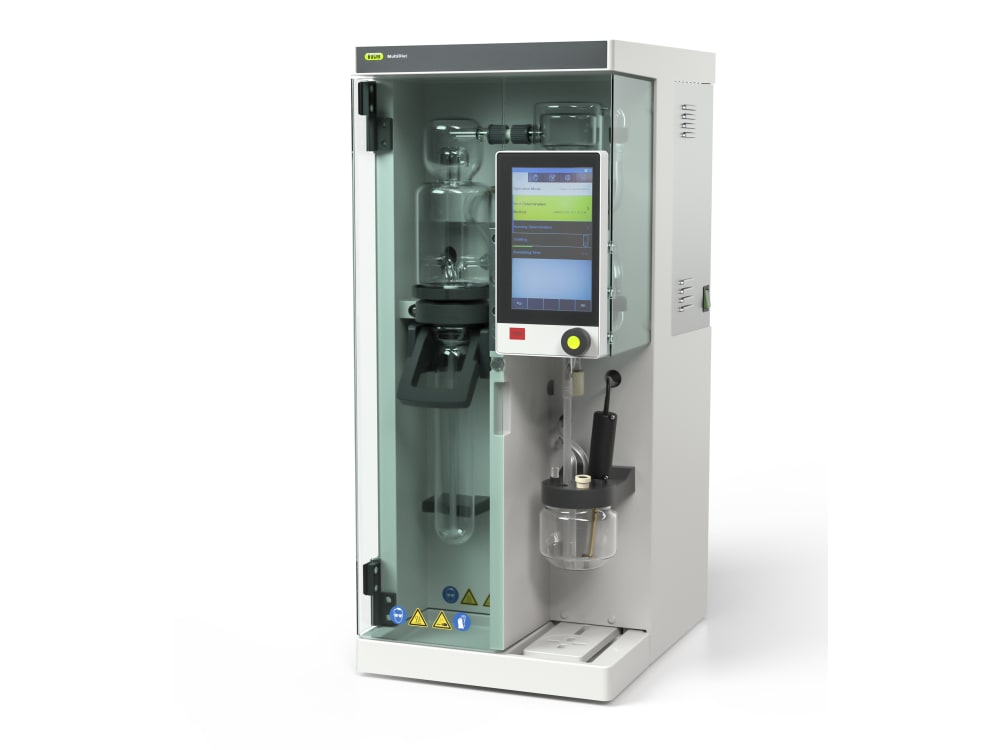
Determination of volatile acids in wine
Dist Line: Determination of volatile acids in wine by steam distillation and subsequent titration

The main part (>95%) of the volatile acidity in wine and juice is acetic acid which is formed by oxidative or anaerobic fermentation. The average level of acetic acid in dry table wine is less than 0.4 g/L. However, levels can range from undetectable up to 3 g/L. High levels of volatile acids are an indicator for a low quality and acetous product. In the European Union and Switzerland, the tolerance level of volatile acids is 18 mEq/L (1.08 g acetic acid/L) for white wine and 20 mEq/L (1.20 g acetic acid/L) for red wine. Steam distillation is the preferred method for volatile acids determination and described in normative procedures. In this Application Note No. 785/2021, a method for the measurement of volatile acids using the EasyDist instrument is described. Importantly, the used distillation system can be used for volatile acids and alcohol determination.