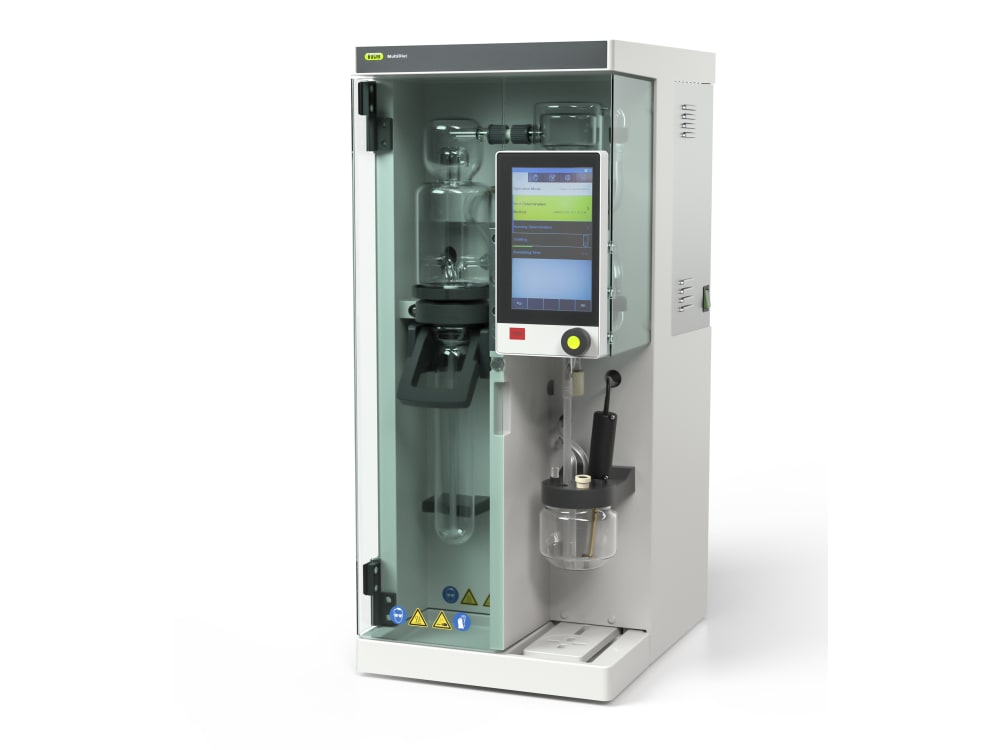
Bestimmung von Cyanwasserstoff in Nahrungs- und Futtermitteln
BÜCHI-Cyanid-Stopfen für sichere Arbeitsbedingungen und hohe Erträge

Zyanogene Glycoside kommen in zahlreichen Nahrungs- und Futtermittelprodukten, wie Mandeln, Bambussprossen, Maniok, Limabohnen, Sorghum und Steinobst vor und bestehen aus durch Glykosylierung stabilisierten Zyanhydrinen. In glykolysierter Form gelten zyanogene Glycoside als ungiftig, jedoch zersetzen die Enzyme der Darmflora die zyanogenen Glycoside im Zuge des Verdauungsprozesses zu dem für den Menschen hochgiftigen Zyanwasserstoff (HCN). Hier beschreiben wir eine Methode für die quantitative Bestimmung von Zyanwasserstoff nach der enzymatischen Hydrolyse der zyanogenen Glycoside in Mandeln, Backwaren, Kernen, Persipan (Aprikosenkernpaste) und Marzipan (Mandelpaste), Rohmixturen mit Amygdalin als Modellverbindung. Die Methode entspricht der internationalen Norm ISO 2164-1975 und der AOAC-Methode 915.03.