Détermination du taux d'azote et des protéines dans les produits laitiers (comprimés Kjeldahl)
Détermination du taux d'azote et de protéine dans les produits laitiers à l'aide de comprimés Kjeldahl et de peroxyde d'hydrogène

S'inscrire pour télécharger
Instruments correspondants
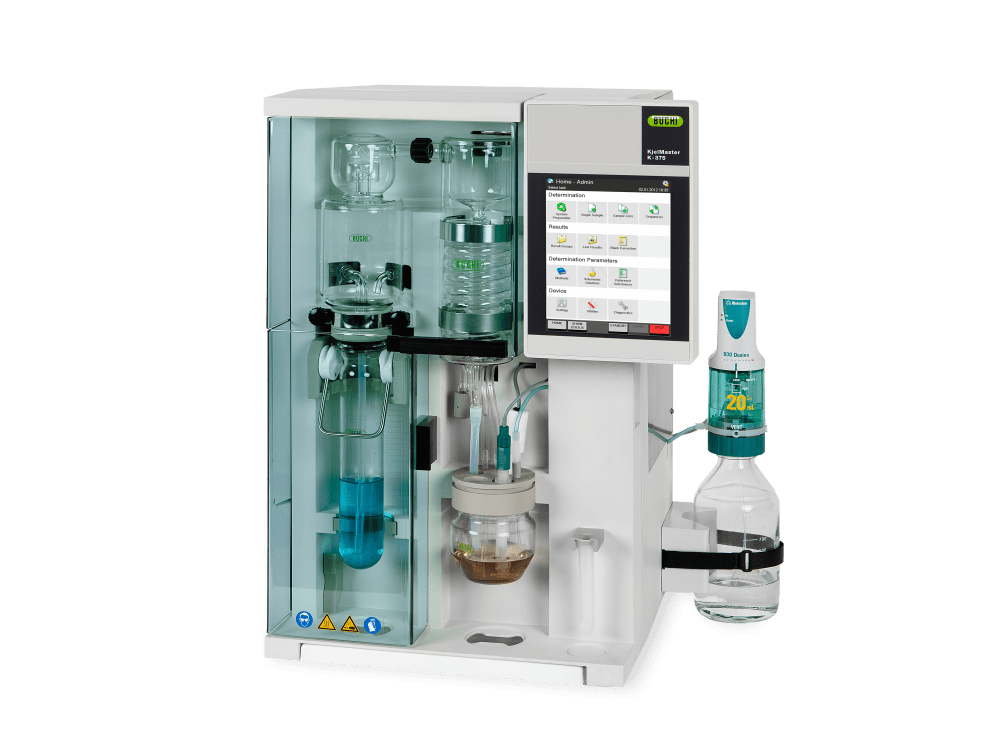
KjelMaster K-375 & KjelSampler K-376 / K-377
Perform potentiometric and colorimetric titrations with the KjelMaster K-375 and a free choice of methods at perfect usability. Gain high throughput, more automation and sophisticated data management for convenient nitrogen and protein analysis.
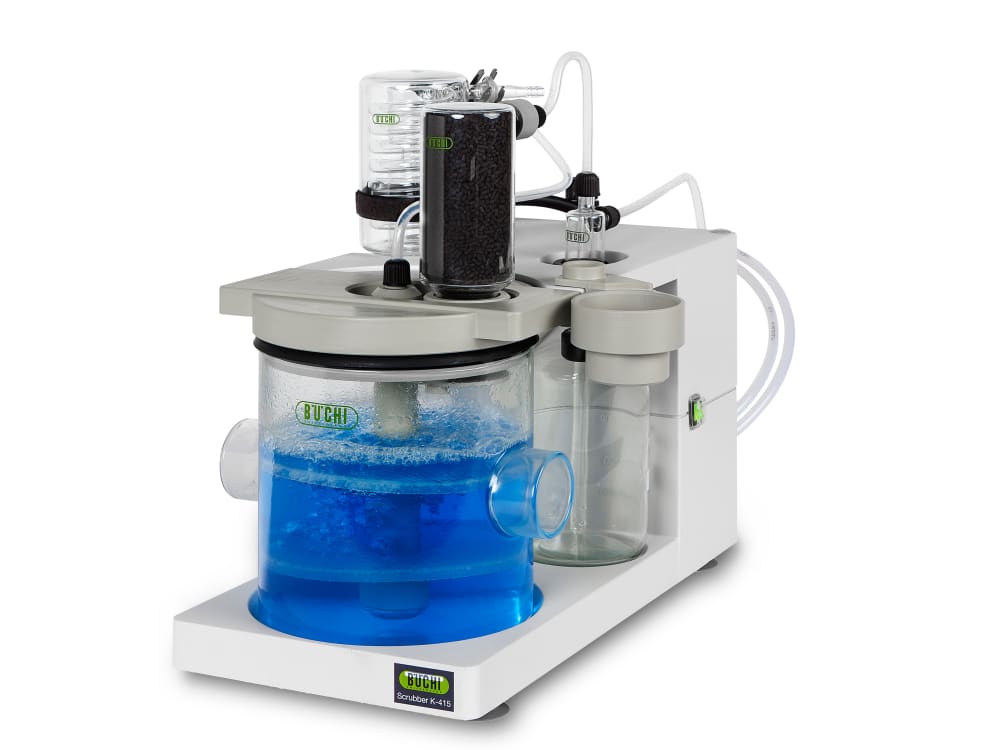
Scrubber K-415
With four steps to occupational safety, Scrubber K-415 provides you with maximal protection. The unit neutralizes poisonous fumes and reaction gases and minimizes use of cooling water to safeguard both you and the environment.
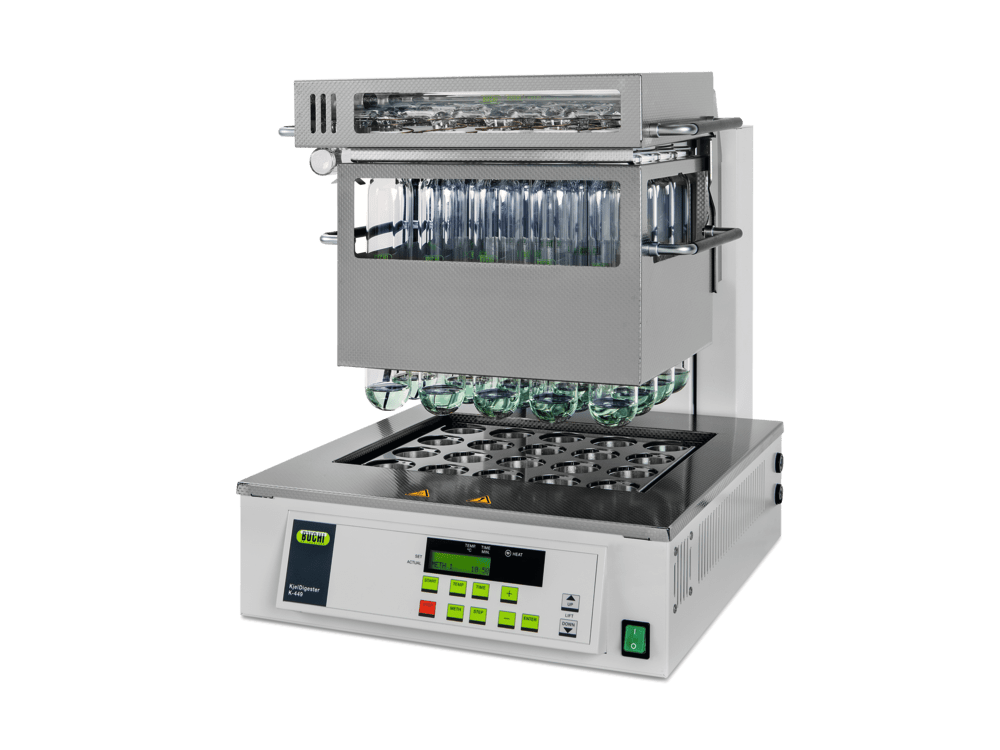
KjelDigester K-446 / K-449
The KjelDigester K-446 / K-449 reduces the block digestion process by up to 2 hours and meets the highest safety requirements. The high degree of automation is the perfect match to the KjelMaster System allowing more samples per day to be processed.
KjelMaster K-375 & KjelSampler K-376 / K-377
Perform potentiometric and colorimetric titrations with the KjelMaster K-375 and a free choice of methods at perfect usability. Gain high throughput, more automation and sophisticated data management for convenient nitrogen and protein analysis.
KjelMaster K-375 & KjelSampler K-376 / K-377
Perform potentiometric and colorimetric titrations with the KjelMaster K-375 and a free choice of methods at perfect usability. Gain high throughput, more automation and sophisticated data management for convenient nitrogen and protein analysis.
Scrubber K-415
With four steps to occupational safety, Scrubber K-415 provides you with maximal protection. The unit neutralizes poisonous fumes and reaction gases and minimizes use of cooling water to safeguard both you and the environment.